
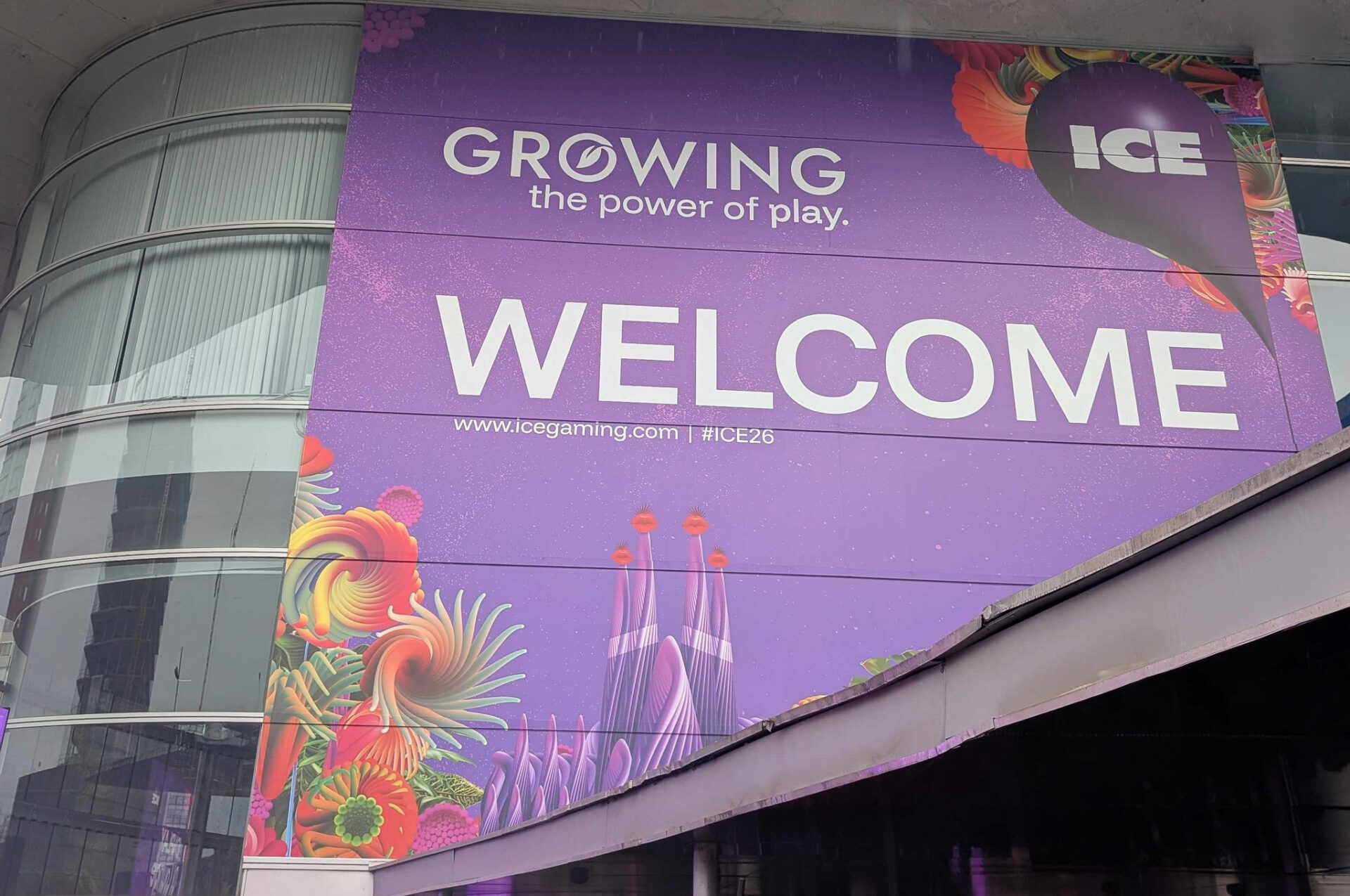
The Biggest Takeaways from ICE Barcelona 2026 (and what you missed if you weren’t there)
Steve Corcoran (Head of Consultancy) and Steven Lamb (Business Development Manager) attended ICE Barcelona 2026. Here are the biggest takeaways and what you missed if you weren’t there.
ICE Barcelona 2026 was, without question, one of the biggest industry events we’ve attended, both in terms of the conversations we had and the sheer physical scale, with an overwhelming amount to see, hear and absorb. With 600+ exhibitors, ICE filled a colossal venue with wall-to-wall stands, demos, meetings and networking.
But beyond the scale, the most striking takeaway was this:
This isn’t an operator-only event. It’s a showcase of the supplier ecosystem that powers operators.
Here are the key takeaways…
The supply chain is broader than most people realise
On paper, most people know gaming extends beyond game studios and platform providers. On the show floor, it lands differently: gaming is supported by an enormous, specialised supply chain that is expanding fast.
Yes, there were plenty of agencies developing games and a large number of “plug and play” providers offering similar end products with different front-end graphics. But the deeper value (and complexity) sat behind the scenes where operators build capability.
Across the floor, you could see suppliers supporting nearly every layer of operations, including:
- Payments providers (in huge volume)
- Data, fraud, risk, and ID verification
- Compliance and regulatory tooling
- Infrastructure, hosting, and managed services
- Sustainability suppliers and venue tech
- Land-based casino technology (far beyond“bookies”)
For us at Perform Partners, it reinforced the view that gaming isn’t just about content; it’s about operational capability.
The organisations that win are often the ones that can scale safely, stay compliant, and manage risk across increasingly complex regulatory environments. The operational stack behind gaming is now a competitive advantage in its own right.
Compliance: the conversation that matters
Probably the most valuable insight of the week came from a catch-up with Kirsty Caldwell, Founder and CEO at Betsmart Consulting, which brought real clarity on the practical realities of compliance pressure across the sector.
Two messages landed hard:
- Many businesses remain behind on ‘fairer gambling’ requirements
- The infrastructure needed for effective GAMSTOP alignment still isn’t consistently embedded
That theme also surfaced in conversations we had with multiple gambling operators: there is recognition of internal gaps, combined with a growing appetite to address them properly.
From our lens at Perform Partners, the difference between ‘we know we have a gap’ and ‘we’ve actually fixed it’ is rarely intent, it’s delivery. Meaningful support isn’t just identifying gaps. It’s building the capability to close them without disrupting live operations.
Payments were everywhere and crypto is forcing questions
Payments was the other dominant theme. The number of payments companies exhibiting was genuinely surprising, and it signals where pressure (and opportunity) is building.
Two things stood out:
- Payments innovation is accelerating, but so is complexity (routing, risk controls, KYC, chargebacks, failure rates and jurisdictional friction).
- Crypto-focused providers had a visible presence, promoting crypto use in gaming payments.
Whether crypto becomes mainstream in regulated gaming or remains niche, it’s already prompting the right questions:
- What does responsible payments mean when crypto rails are involved?
- How do you maintain controls and auditability?
- How do you avoid exposure to grey markets at a time when compliance expectations are tightening?
Bottom line: payments is no longer a ‘finance function’ topic. It’s a governance and operating model topic.
Partner enablement fuels competition
Before the show opened, we attended an AWS session that was explicitly partnership-driven. The focus was on AWS BOX incentives that encourage partners to collaborate and build end-to-end solutions.
The detail matters less than the direction:
Cloud providers aren’t competing solely on infrastructure anymore. They’re competing on partner ecosystems, co-sell motions, packaged solutions and partner-led go-to-market.
For operators and suppliers, that changes the playbook because capability is increasingly assembled through partnerships, not built alone.
What we learned (key takeaways)
- ICE is supplier-first: operators are present, but the floor is dominated by the supply ecosystem.
- Compliance capability is becoming a competitive differentiator, not just a requirement.
- GAMSTOP and fairer gambling infrastructure still appear uneven across the sector in practice.
- Payments innovation is accelerating, including crypto-led propositions that raise governance and controls questions.
A practical reflection (for anyone attending next time)
ICE Barcelona was an eye-opener. It showed the scale of the industry, the breadth of the supporting supply chain and the operational demands facing gaming businesses.
If you’re an operator: treat ICE as a chance to pressure-test your stack and roadmap against what’s available now.
If you’re a supplier: it’s the clearest view of your competitive set you’ll get all year.
If you’re a consultancy/service partner: pre-book operator conversations or the event will pull you into a supplier-to-supplier vortex that looks productive but isn’t always strategic.
If you are a leader who is actively thinking about and addressing delivery, compliance, and operational transformation and turning ‘we should fix this’ into a plan that works, get in touch today.