Perform Partners Is Now a Certified AWS OLA Partner: What It Means for Your Cloud Costs, Risks and Opportunities

Perform Partners has been certified under the AWS Optimisation and Licensing Assessment (OLA) program, placing us among a select group of accredited AWS OLA partners in the UK. For organisations weighing up cloud investment, infrastructure renewal, licensing costs or data centre exit strategies, this means access to our vendor-funded Cloud Viability Assessment (CVA) that provides the evidence needed to make confident decisions. Perform Partners deliver these assessments end-to-end, combining data-driven analysis with independent guidance tailored to your organisation’s priorities and objectives.
Certification is awarded on delivery, not intent. Before achieving certification, we delivered Optimisation and Licensing Assessments alongside Ingram Micro, whose support, guidance, and experience helped us build the foundations for the capability we have today. AWS assessed our track record, our team’s technical accreditation and the standard of the work we put in front of clients before endorsing us.
That offer is the Perform Partners Cloud Viability Assessment: a full analysis of what your infrastructure, workloads, and software licenses are costing you, what you could stop paying for, and what the same workloads would cost on AWS. Funded by AWS, delivered by us, with no obligation to migrate at the end of it.
The results speak for the method. One recent assessment covered more than 2,000 virtual machines and identified over £8 million in savings across three years. Another, at a fraction of the size, found substantial savings in an environment the client believed was already efficient. Across the program, AWS reports organisations typically reduce Microsoft SQL Server licensing costs by 45%, Windows Server by 77%, and overall costs by 36%.
Most organisations are carrying costs like these without knowing it, because nothing in a licensing agreement or a monthly bill flags the gap between what you’re paying for and what you’re using. A CVA closes that gap with evidence.
What is a Cloud Viability Assessment?
A Cloud Viability Assessment is a fully funded, no-obligation review that establishes what an organisation is spending on infrastructure, workloads, and software licensing, where that spend is unnecessary, and what the same workloads would cost on AWS.
It works in three parts:
- We measure what you are genuinely using, rather than what was specified or assumed.
- We compare your licensing position to that reality: what you hold, what you pay for, and where the two have diverged.
- We also map dependencies between your systems, so any recommendation to move something accounts for what it would take to move it.
The output is a Total Cost of Ownership report that models your deployment options, licensing scenarios, and potential savings, with recommendations specific enough to act on.
A CVA covers Microsoft Windows Server, SQL Server, VMware, Linux and Oracle workloads, plus storage. It is built for organisations not yet running on AWS: your own data centre, another cloud such as Microsoft Azure or Google Cloud Platform (GCP), or any combination of the two.

AWS OLA vs Cloud Viability Assessment: what’s the difference?
The AWS OLA is the AWS program. The Cloud Viability Assessment is the engagement we deliver through it.
The distinction matters commercially. The OLA program provides the discovery tooling that measures your environment, and the funding that makes the assessment free at the point of use. AWS restricts both to certified partners. The CVA is our work (our scoping, analysis, interpretation, and recommendations), and it’s why organisations choose us to run it.
How does the AWS OLA program work?
AWS funds the assessment because decisions based on accurate data benefit everyone involved. It provides the discovery tooling, whether AWS native or third-party software, to measure actual utilisation across infrastructure and workloads, and it covers the cost of the analysis.
That is what changed for us. We now work directly with the AWS OLA Team, with no intermediary between our clients and the program, and we can put a fully funded assessment in front of any organisation that qualifies.
Where do hidden licensing and infrastructure, workload and licensing costs build up?
The costs that matter are rarely the ones anyone is looking at. Licences still being paid for long after the systems they supported were retired or redesigned. Workloads running at a fraction of their capacity and charged at full rate. Capacity provisioned for a peak that has not recurred in years. Entitlements allocated on a historical pattern of use that no longer resembles current demand.
None of these triggers an alert. It survives budget cycles precisely because it looks like business as usual, and it compounds quietly while attention goes elsewhere.
Our free guide, Cost and Licensing Blind Spots: A 3-Minute Guide, sets out where this typically accumulates and what it tends to be worth.
What AWS OLA partner status means for our clients?
It means the assessment arrives with AWS behind it and our team in front of it.
We have delivered CVAs for clients across our sectors, at scales from a few hundred workloads to several thousand, and the offering is listed on our AWS Marketplace as a route in for new clients. Mixed environments are the norm rather than the exception, so we assess what you actually operate, whether that is VMware, Microsoft, Linux, databases, or all of them at once, and shape each recommendation around your licensing position, your operational constraints and your genuine appetite for change.
The value is in the interpretation. Utilisation data on its own tells you very little; the same figures can support a refresh, a migration or a decision to leave things exactly as they are. We give IT, Finance, Procurement and leadership a set of numbers they can each act on, and the reasoning that connects them.
A hardware refresh on the horizon, costs rising without a clear explanation, or licensing complexity that is creating uncertainty between teams are all reasons to look properly. Our guide 5 Signals Your Infrastructure Is Holding You Back covers the most common indicators and what each one usually means.
What does a Cloud Viability Assessment produce?
A CVA produces a decision pack. It contains five things:
- A full inventory of the servers and systems in scope, so every team is working from the same picture
- Several routes forward set side by side, rather than a single recommendation to accept or reject
- A cost comparison between what you pay now and what a properly sized environment would cost
- The savings available, with the evidence behind each one, in a form that survives scrutiny at board level
- A dependency map showing what relies on what, and the order in which anything would need to move
Our anonymised Sample Report pack shows the depth of the analysis in full, in the format IT, Finance and Procurement each receive it.
Getting IT, Finance and Procurement to agree
IT optimises for performance, Finance for budget, Procurement for contracts. Each position is reasonable on its own terms, and without a shared view of the facts, they pull against each other. Renewal dates arrive before a strategy is agreed. Business cases stall because the risk cannot be quantified to everyone’s satisfaction. Oversized infrastructure survives another year because the cautious decision that created it is never revisited as a group.
A CVA resolves this by putting one set of evidence in front of all of them: what is being used, what is being paid for, what is sitting idle, and what the difference is worth over three years.
After that, disagreement is a matter of strategy rather than data, which is a considerably better problem to have.
The Cost of Misalignment Across IT, Finance and Procurement examines how this plays out and what it costs organisations that leave it unaddressed.
How we earned AWS OLA certification
Certification followed the work rather than preceding it. Assessments delivered for real clients at real scale, a team through the required AWS training, established relationships with the AWS OLA Team and our License Delivery Partners, and an accreditation process we ran to the same standard as any client engagement.
We would also like to thank Ingram Micro for their continued support, guidance and collaboration throughout our AWS journey.
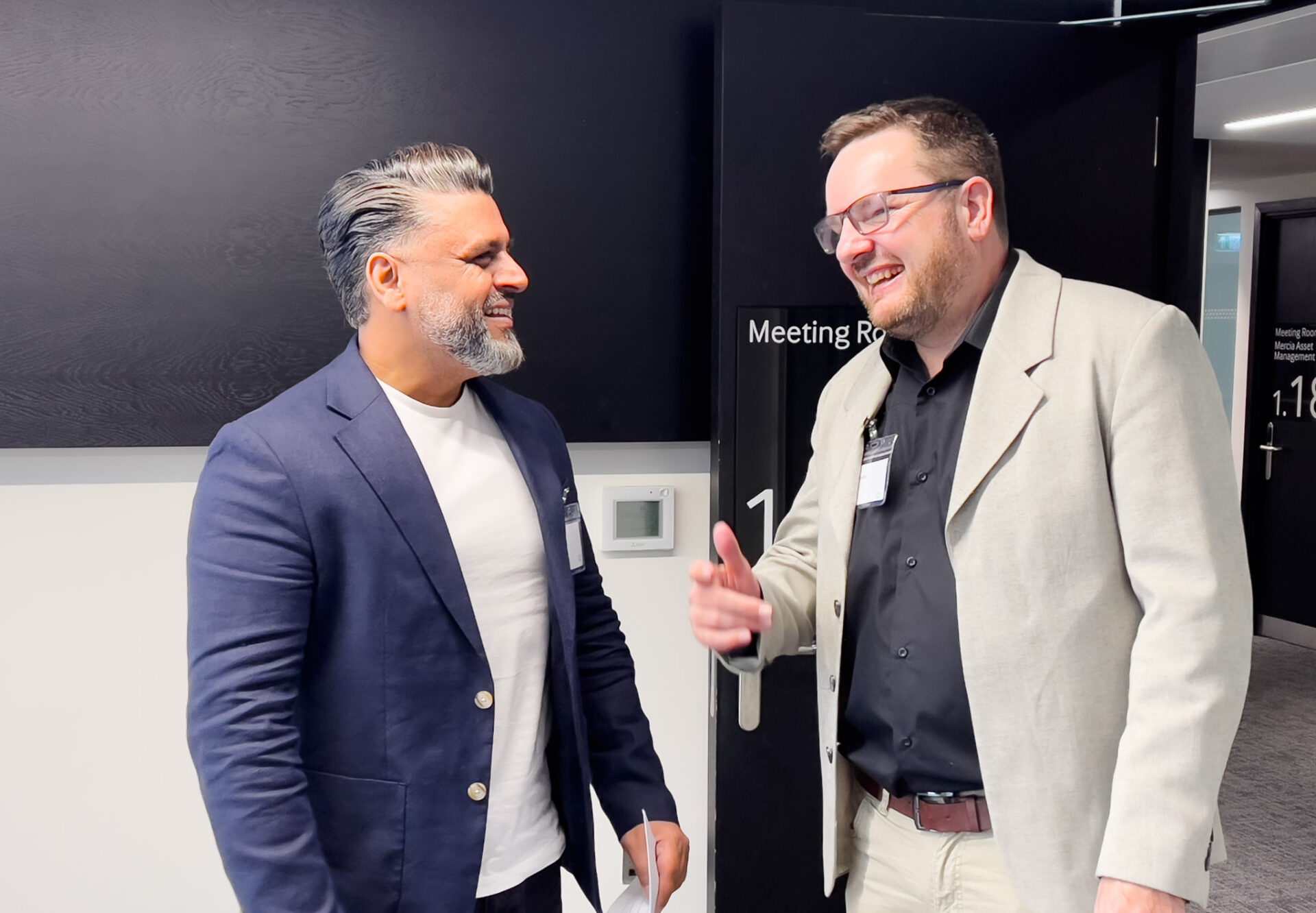
Cloë Thornton, our Business Operations and Strategy Lead Analyst, helped to build the submission. Cloë’s work spans internal change, process design, compliance and operational delivery, and that combination is exactly what the accreditation demanded: a complex process involving multiple stakeholders, presented clearly enough to be assessed on its merits.
“This is what we do at Perform Partners. We committed, we trained, we built the case, and we delivered. That’s the Perform way: work with passion, be honest about where you’re starting from, and hold yourself to a standard that gets the job done. The whole team played a part in this, and Cloë in particular brought real precision and rigour to the process that sealed it. I’m proud of everyone involved.”
Adeel Azam, Perform Partners
Is a Cloud Viability Assessment right for your organisation?
If you run Windows Server, SQL Server, VMware, Linux or Oracle workloads, whether in your own data centre, in Azure, in GCP, or across a mix, and no one has formally established what they cost, a CVA will tell you.
It is fully funded, carries no obligation, and takes two to four weeks depending on the size and complexity of your environment. The organisations that benefit most are usually the ones most confident they have nothing to find.
In the first conversation, we will tell you whether it is a fit for you, and if it isn’t, we will say so.
Are you ready to explore your options? Get in touch…
Commonly Asked Questions About Perform’s Cloud Viability Assessment
How much does a Cloud Viability Assessment cost, and do we have to migrate afterwards?
Nothing, and no. The CVA is fully funded by the AWS OLA program. You receive a complete cost report, workload analysis and licensing recommendations at zero cost. There is no requirement to migrate and no commercial pressure to do so. The assessment stands on its own as intelligence about your environment, and what you do next is entirely your decision.
How long does an AWS OLA take, and what’s involved?
A Cloud Viability Assessment can take two to four weeks, depending on your environment’s size and complexity. It begins with a scoping call to agree on what is included and how the data will be collected. Discovery tooling then runs for a period, ideally spanning one of your busier periods so the picture reflects real demand rather than a quiet week. Infrastructure and licensing experts analyse the results and produce a report covering your options, the licensing scenarios available and the savings attached to each. We manage the process end to end, and the demand on your team is minimal.
Which workloads qualify, and do we need to be in our own data centre?
A CVA covers Microsoft Windows Server, SQL Server, VMware and Oracle workloads. It is available whether you run them in your own data centre, in another cloud such as Microsoft Azure or Google Cloud Platform (GCP), or across a combination of both. A CVA is not designed for organisations already running on AWS. You do not need to be planning a migration to qualify.
Does a Cloud Viability Assessment cover Azure or Google Cloud workloads?
Yes. Workloads running in Microsoft Azure or Google Cloud Platform are in scope, as are on-premises and mixed environments. The assessment models what those workloads would cost on AWS and what your licensing position would be.
How do we find out if our organisation qualifies?
It starts with a conversation. Visit our Cloud Viability Assessment page, email aws@perform-partners.com, or find us on the AWS Marketplace. We will tell you in that first conversation whether a CVA makes sense, what the process involves, and what you could realistically expect to save.
Find us on AWS Marketplace: Perform Partners Cloud Viability Assessment for AWS | CVA | AWS OLA