
AI Adoption with Human Judgement: Insights from UKAI Leeds
Artificial intelligence continues to feature prominently in leadership discussions and transformation programmes. As organisations move beyond early experimentation, leaders are working through how to apply AI responsibly, where it can create meaningful value, and how to keep decision-making grounded in experience, evidence, and organisational context.
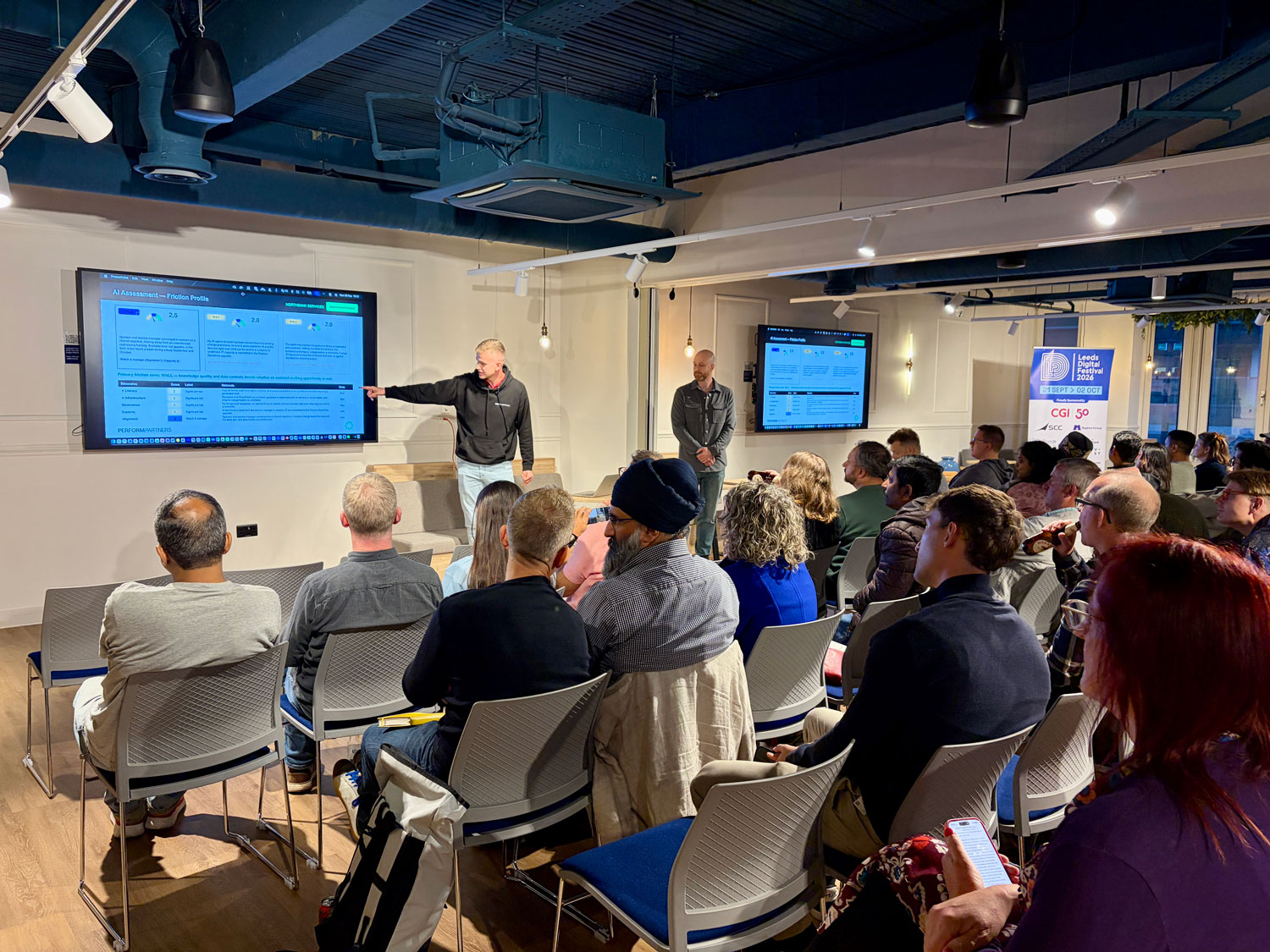
These themes formed the basis of a recent presentation delivered by Shaun Walsh and Tom Cutts at the UKAI Leeds Meetup, hosted at Barclays Eagle Labs. UKAI is the trade association for the UK AI sector, bringing together leaders, organisations and practitioners who are helping shape the responsible adoption of artificial intelligence across the UK.
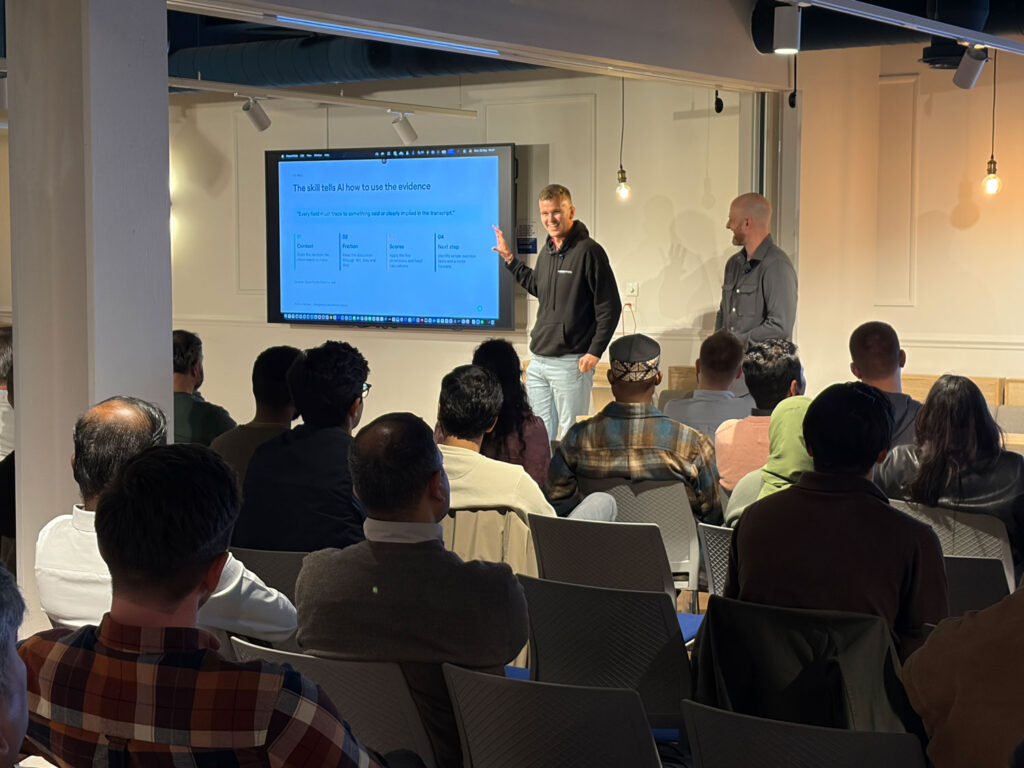
Drawing on practical experience from client engagements and transformation programmes, Shaun and Tom explained how Perform Partners combines established consulting, discovery and facilitation techniques with AI-assisted analysis. The session explored how well-used AI can help experienced teams work through information more efficiently while preserving the judgement, scrutiny and professional standards clients expect.
How Perform Partners uses AI within client engagements
Workshops, stakeholder interviews and discovery sessions generate a substantial amount of information. Notes, observations, transcripts, operational evidence and differing stakeholder perspectives all need to be considered before a team can form an accurate view of the situation.
Perform Partners has developed ways of using AI-assisted analysis to help skilled practitioners examine this information efficiently. Our people remain responsible for asking the questions, facilitating the conversations, testing assumptions, interpreting findings and determining what those findings mean within the client’s wider organisational context.
The use of AI helps the team to identify connections, organise information and prepare high-quality outputs more quickly. The client benefits from the same depth of experience, care and professional judgement, with useful findings available sooner and delivery teams able to maintain their focus on the work that requires their direct involvement.
A wider organisational capability
The capability shared at UKAI Leeds extends beyond consulting and discovery. The quality of a client’s experience is shaped by the wider team involved in supporting an engagement, including delivery, account management, marketing, communications, documentation and presentation design.
Historically, producing a polished client output could involve several handovers. Findings might need to be structured, reviewed, formatted, visually refined and checked for consistency before they could be shared. Each stage served a purpose, although the combined process could add time between completing the work and placing a useful output in the client’s hands.
Perform Partners has brought the knowledge and standards of these different disciplines into an AI-supported way of working. Consulting experience, account knowledge, communication skills, brand standards and presentation expertise remain part of the process. AI tooling helps our people apply that collective knowledge efficiently and consistently.
The result is a broader quality experience than AI-assisted analysis alone might suggest. Clients receive accurate, professionally presented work more quickly, while the team retains responsibility for quality, interpretation and delivery.
Why human judgement remains central to AI adoption
AI can help people examine large volumes of information, identify themes and organise findings. Experienced professionals give those findings meaning by accounting for stakeholder priorities, organisational history, operational constraints, commercial pressures and the consequences of a decision.
Successful AI adoption therefore depends on the skills of the people applying it. They need to understand the work, recognise where additional evidence is required and know when an output should be questioned, corrected or set aside. Accountability continues to sit with the people making and implementing the decision.
Developing this capability takes deliberate practice. Teams need the confidence to use AI effectively, the expertise to assess its output and the discipline to maintain appropriate quality controls. Organisations also need to consider how the use of AI may affect skills, attention and professional judgement over time.
Continuing the conversation on AI adoption
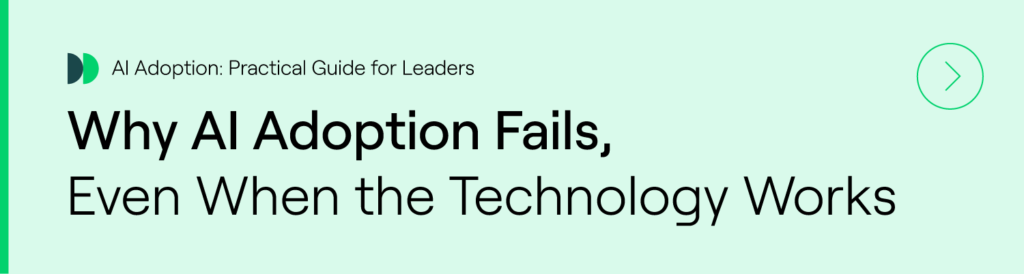
The UKAI Leeds presentation was followed by our own leadership event, AI Adoption, Human Judgement and the Hidden Cost of Moving Fast, delivered as part of Leeds Digital Festival.
That session examined the human and operational effects of AI adoption, including skills, attention, accountability and decision-making under pressure. It gave senior leaders an opportunity to consider how quickly AI is entering their organisations and whether their people have the awareness, support and working practices required to use it well.
Together, the two sessions address connected parts of the same leadership responsibility. Organisations need practical ways to use AI productively, alongside a clear understanding of how its adoption affects people, operational quality and judgement.
The experience shared at UKAI Leeds shows how AI can help skilled teams deliver high-quality work faster. Our Leeds Digital Festival session considers the care required to sustain the human capability that makes those outcomes possible.
Creating clarity before committing resources
Organisations considering AI can quickly develop a long list of possible use cases. Each opportunity may attract different expectations from leaders, operational teams, technology specialists and the people whose work will be affected.
A useful decision requires a shared understanding of the problem, the desired outcome, and the evidence supporting investment. Leaders also need visibility of the assumptions, dependencies and delivery constraints that could affect the result.
This is where early exploration provides value. A focused examination of the opportunity can bring relevant perspectives together, reveal missing evidence, and help leaders decide on an appropriate next move before a proposed initiative gathers significant budget, resource, or organisational momentum.
The principles shared during the UKAI Leeds session align closely with the Perform Partners Opportunity Explorer. This one-hour, senior-led working session helps leaders bring structure to a live business, technology or change challenge. It provides space to test assumptions, identify gaps in the available evidence, and consider sensible next steps before committing significant resources.

Watch the UKAI Leeds recording
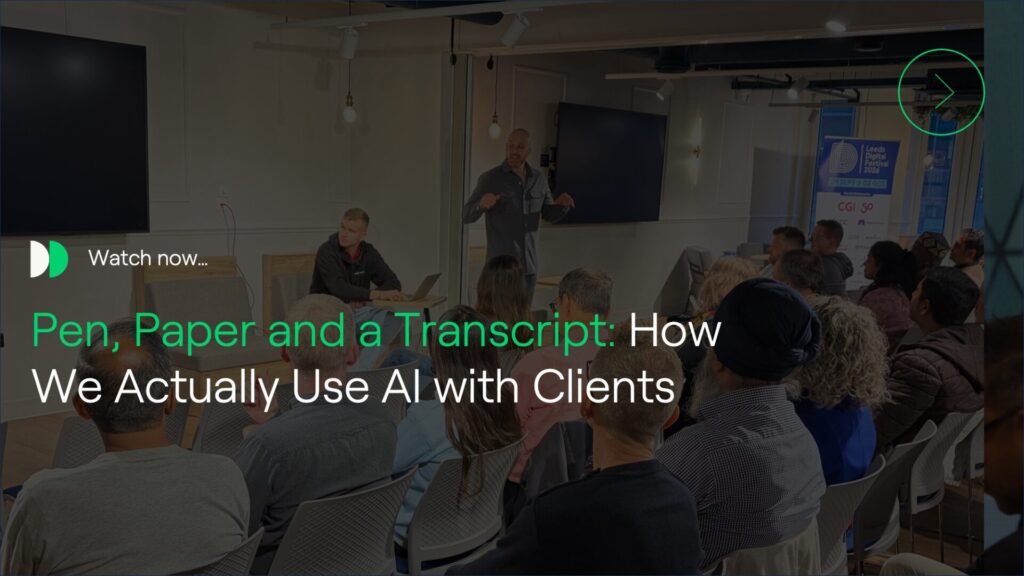
In Pen, Paper and a Transcript: How We Actually Use AI with Clients, Shaun Walsh and Tom Cutts share a practical view of how Perform Partners combines human expertise, proven techniques and AI-assisted analysis across client engagements.
The recording considers the full process behind the output, including discovery, interpretation, quality control and the contribution of the wider team. It shows how experienced people can use AI to deliver the same high standards with greater pace while remaining focused on client delivery.
A practical approach to responsible AI adoption
The experience shared at UKAI Leeds shows what responsible AI adoption can look like in practice. Perform Partners has developed this capability through the combined expertise of people working across consulting, delivery, account management, marketing and communications.
AI helps those teams apply their collective knowledge more efficiently. Our people continue to lead the engagement, interpret the evidence, maintain quality and remain accountable for what is delivered.
For clients, this means receiving accurate, considered and professionally presented work sooner. For the team, it creates more time for the conversations, decisions and delivery activities where direct human involvement carries the greatest value.

Frequently Asked Questions About AI Adoption and Human Judgement
What is AI adoption?
AI adoption is the process of introducing artificial intelligence into an organisation’s operations, services or decision-making processes in a way that creates measurable business value. Successful AI adoption involves more than implementing technology. It requires clear objectives, stakeholder engagement, governance, skills development and an understanding of how AI will support organisational outcomes.
Why is human judgement important in AI adoption?
Human judgement provides context, accountability and experience. While AI can process large volumes of information quickly, people remain responsible for interpreting findings, evaluating risks, considering organisational factors and making informed decisions. Organisations typically achieve better outcomes when AI supports human expertise rather than replacing it.
Why do AI adoption initiatives fail?
Many AI initiatives struggle because organisations start with technology before clearly understanding the problem they are trying to solve. Common challenges include unclear objectives, limited stakeholder engagement, insufficient governance, unrealistic expectations and difficulties demonstrating measurable value. Successful adoption is usually built on understanding business outcomes first and technology second.
How can organisations identify the right AI opportunities?
Organisations can identify the right AI opportunities by examining their business challenges, operational constraints, customer needs and strategic objectives. The strongest opportunities are typically those where AI can improve efficiency, accelerate analysis, support decision-making or help people focus more time on high-value activities. Establishing evidence and evaluating potential outcomes before investing helps improve decision quality.
How can leaders evaluate an AI investment before committing budget?
Leaders should understand the problem they are solving, the outcomes they expect to achieve and the evidence supporting the proposed investment. It is also important to consider organisational readiness, stakeholder impact, governance requirements, implementation risks and how success will be measured. Taking time to explore these factors often leads to better investment decisions and clearer priorities.
How does Perform Partners use AI within client engagements?
Perform Partners combines proven consulting, discovery and facilitation techniques with AI-assisted analysis to support client engagements. Experienced practitioners remain responsible for stakeholder engagement, facilitation, challenge, interpretation and quality assurance. AI helps teams work through information more efficiently, allowing clients to receive high-quality outputs, insights and recommendations more quickly while maintaining the standards and expertise they expect.
What is the Opportunity Explorer?
The Opportunity Explorer is a focused, senior-led working session designed to help organisations explore a business, technology or change challenge before committing significant time, budget or resources. The session helps leaders test assumptions, identify evidence gaps, understand stakeholder perspectives and develop a clearer view of potential next steps.
Who should consider an Opportunity Explorer?
Opportunity Explorer is designed for senior leaders responsible for business change, technology investment, transformation programmes, AI adoption or strategic decision-making. It is particularly valuable when organisations face competing priorities, uncertain outcomes, complex stakeholder requirements, or multiple potential options and need greater clarity before moving forward.